

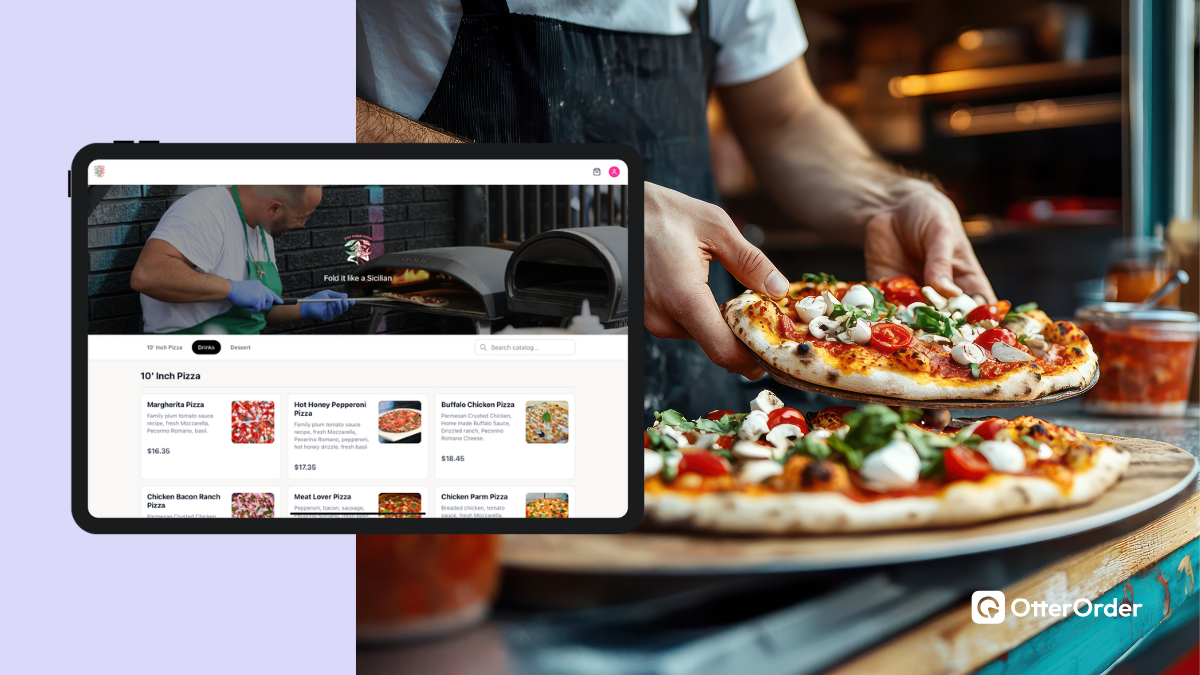
Food trucks, pop-up pizza shops, and ghost kitchens are built to move fast. They operate in tight spaces, change locations frequently, and serve customers who expect speed without friction. The business model is lean by design.
The technology powering many of these concepts, however, is anything but.
Behind the scenes, it’s common for operators to rely on multiple systems just to get through a service. One tool for taking in-person orders. Another for online ordering. A third for delivery. Each comes with its own subscription, its own tablet, and its own workflow.
Over time, that stack becomes expensive, fragile, and hard to manage—especially for small, mobile teams.
When Software Starts Working Against You
Most food trucks and pop-ups don’t set out to overcomplicate things. Fragmentation happens gradually.
An operator starts with one platform to accept payments. Then they add an online ordering service so customers can order ahead. Then a delivery app enters the picture. Each tool solves a specific problem, but none of them talk to each other particularly well.
Before processing fees are even considered, many operators are spending hundreds of dollars a month just to keep the software running. More importantly, orders and payments live in different places. Staff switch between screens during service. Errors become harder to catch. End-of-day reconciliation turns into guesswork.
For concepts that rely on speed and simplicity, that complexity becomes a liability.
One System Instead of a Stack
OtterOrder takes a fundamentally different approach. It doesn’t sit on top of a POS, and it doesn’t rely on third-party payment systems to function.
OtterOrder is the ordering and payment system.
In-person orders, online orders, and delivery all happen inside the same platform. Customers can scan a QR code, tap an NFC tag, or be assigned a table, seat, or pickup number. Payment is completed immediately, within the same flow.
There’s no Square. No Toast. No external POS license required. No extra terminals to configure. Everything—from order placement to payment to kitchen fulfillment—runs through one interface.
For mobile and pop-up concepts, that consolidation changes everything.
Built for Movement, Not Fixed Counters
Traditional restaurant software assumes permanence. Fixed counters. Fixed tables. Fixed service flows.
Food trucks and pop-ups don’t operate that way. Layouts change by location. Service styles shift depending on the event. Sometimes customers sit. Sometimes they stand. Sometimes they grab food and leave.
OtterOrder adapts to those realities without forcing operators into rigid structures. Orders can be tied to a table, a seat, a pickup number, or simply a name. Staff see everything in one place and fulfill accordingly.
The system moves with the business instead of asking the business to slow down for the system.
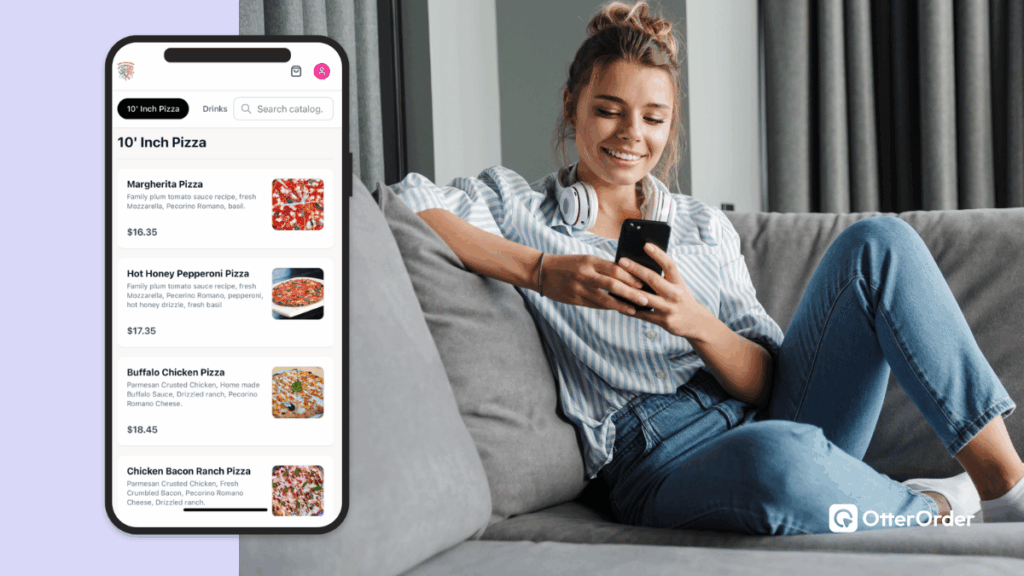
A Pizza Ordering Experience That’s Actually Designed for Pizza
Pizza exposes the weaknesses in most ordering platforms.
Toppings, halves, custom builds, substitutions—this is where generic ordering systems start to feel clumsy. Customers struggle with confusing interfaces. Kitchens receive unclear instructions. Mistakes pile up.
OtterOrder includes a purpose-built pizza ordering experience designed specifically for customization. Customers can easily build pies, select halves, and choose toppings in a way that feels intuitive and polished.
This isn’t something operators usually get without investing in a custom website or bespoke development. Many popular platforms don’t offer it at all. With OtterOrder, it’s built in from day one.
For pop-up pizza concepts and ghost kitchens, that experience translates directly into fewer errors, happier customers, and smoother service.
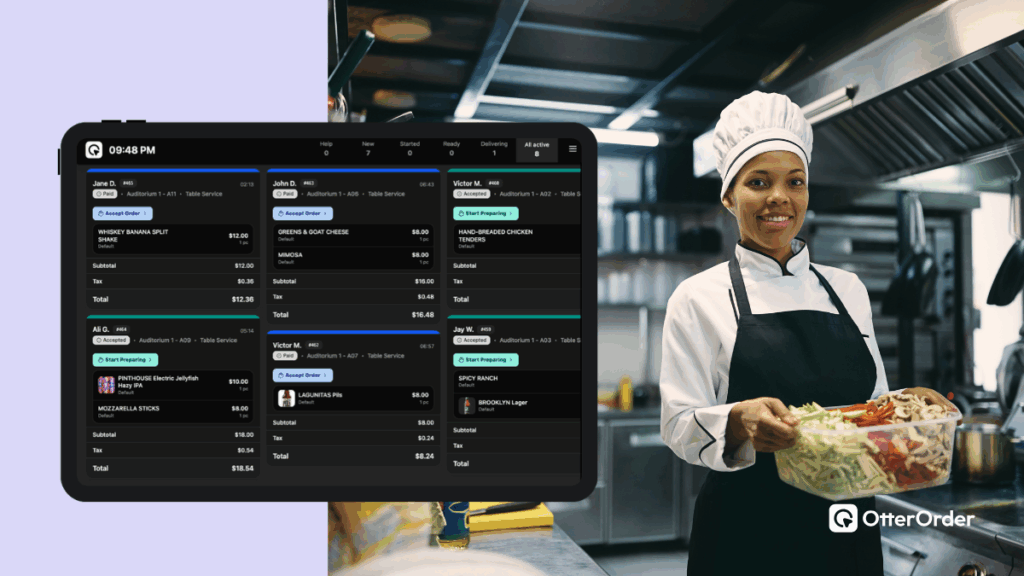
One Kitchen View, No Guesswork
When orders arrive from multiple platforms, kitchens suffer. Staff have to check multiple screens. Tickets come in with different formats and different rules. Small mistakes become inevitable.
By routing every order—whether it comes from a tap, a scan, or delivery—into a single kitchen view, OtterOrder eliminates that chaos. Orders are consistent. Modifiers are clear. Fulfillment becomes predictable instead of reactive.
The result is faster service, less waste, and fewer “what happened to this order?” moments during a rush.
Less Software, More Focus
The biggest benefit of consolidation isn’t just saving money. It’s reducing cognitive load.
When operators aren’t juggling systems, they spend less time troubleshooting and more time focused on food, service, and growth. Staff onboarding becomes easier. Service runs calmer. The operation feels more under control.
For food trucks and pop-ups, that focus often determines whether the concept stays fun—or becomes exhausting.
Software That Matches the Business Model
Mobile food concepts don’t need enterprise POS systems designed for full-service dining rooms. They need tools that are flexible, fast, and capable of handling everything without external dependencies.
OtterOrder replaces the traditional stack with a single platform that manages ordering, payments, delivery, and kitchen operations—without requiring a POS or third-party payment system.
One tablet. One workflow. One source of truth.
That alignment between software and business model is what makes the system work.
Final Thoughts
Food trucks, pop-up pizza shops, and ghost kitchens succeed by staying lean. When technology starts adding friction instead of removing it, something is out of balance.
By handling ordering, payments, delivery, and kitchen operations in one system, OtterOrder removes that friction. The operation gets simpler. Service gets smoother. And the business becomes easier to run—no POS required.
Sometimes the smartest way to grow isn’t adding more tools. It’s using fewer, better ones.
Want to See How It Works for Your Setup?
If you’re running a food truck, pop-up pizza concept, or ghost kitchen and want to simplify your ordering and payment stack, OtterOrder shows how everything can live in one place—from tap-to-order to delivery to kitchen fulfillment.
Learn more at OtterOrder.com.