

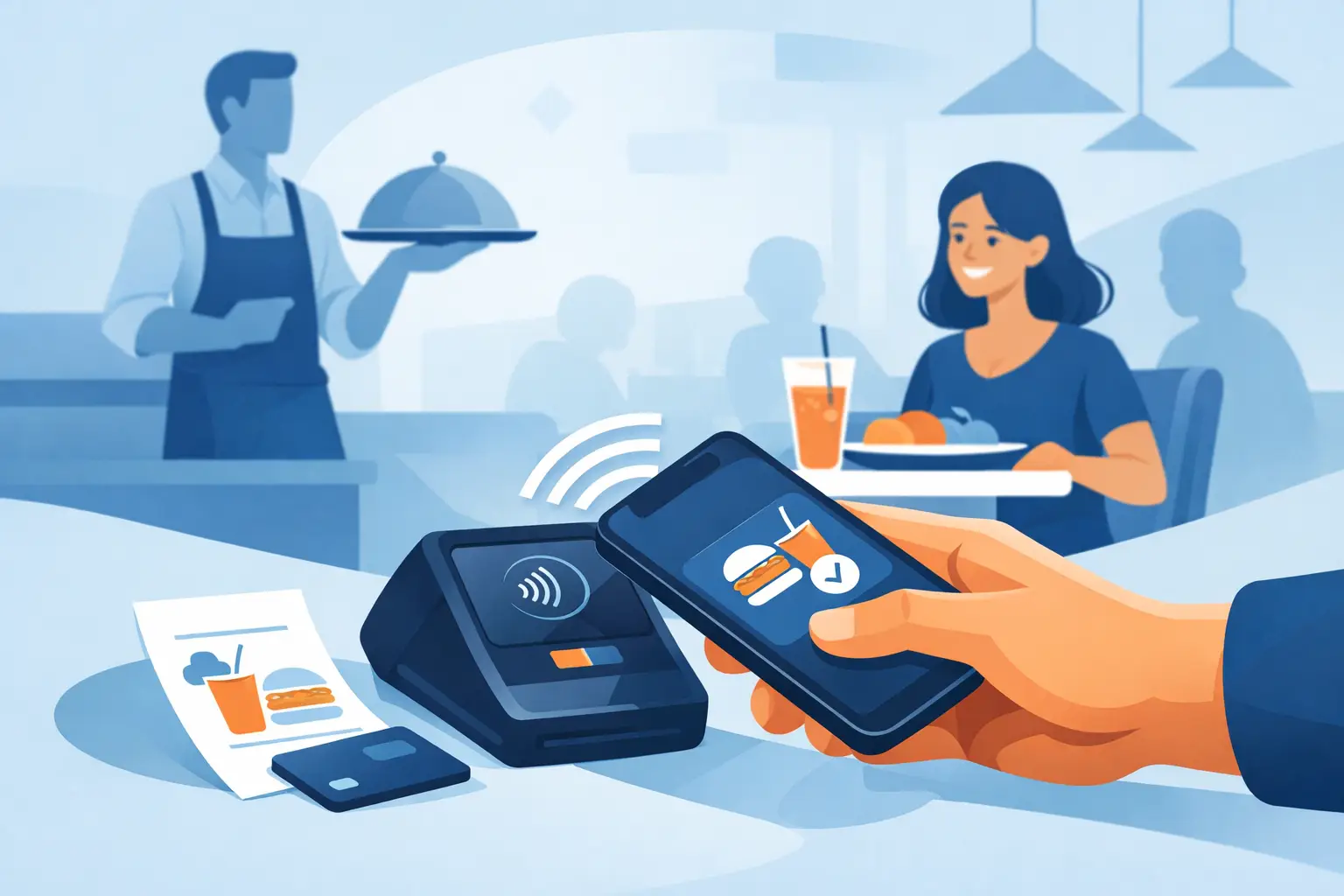
A guest walks up, taps their phone, places an order, and pays in less time than it takes to ask, “Are you still taking orders here?” That is the appeal of nfc tap to order. It removes the small moments of friction that slow down lines, create staff bottlenecks, and cost operators real revenue during rush periods.
For food trucks, fireworks stands, popup bars, ghost kitchens, and high-traffic venues, speed matters because every extra step lowers conversion. Guests do not want a process. They want the shortest path to buying. NFC gives operators a way to make ordering feel immediate without adding more hardware, more training, or another disconnected tool.
What nfc tap to order actually does
At a practical level, nfc tap to order lets a guest tap their phone against an NFC-enabled tag or sign to open a digital ordering experience instantly. Instead of scanning a code, downloading an app, or waiting for staff attention, they are taken straight to the menu, cart, or checkout flow.
That sounds like a small difference. In live operations, it is not. A tap is faster than aiming a camera, waiting for a scan, and hoping the phone picks up the code in bad lighting or from an awkward angle. In loud, crowded, or outdoor environments, those extra seconds add up.
For operators, the value goes beyond convenience. NFC can route guests into a branded ordering flow tied to a specific table, seat, lane, stall, bay, or service zone. That creates more than a quick transaction. It creates location-aware ordering that fits the way the business actually runs.
Why operators are paying attention now
Most venues are not trying to add technology for the sake of it. They are trying to fix very specific problems: long lines, labor pressure, missed upsells, and too many systems stitched together.
NFC tap to order works because it addresses those problems at the point where revenue is won or lost. If guests can start ordering without waiting for a cashier or server, lines move faster. If menus are digital, pricing and availability stay current. If the order enters one system, staff do not have to rekey tickets from different channels.
That matters even more for businesses with variable traffic. A food truck may have quiet stretches followed by a 20-minute surge. A recreation venue may have orders coming from seats, courts, rental counters, and concessions at the same time. A seasonal operation may need to launch quickly without spending months building a custom tech stack.
In each case, the question is the same: how do you make buying easy without making operations harder? NFC is compelling because the guest experience is simple, but the real win is what happens behind it.
Where nfc tap to order works best
The best use cases are environments where speed, mobility, and space constraints matter.
For food trucks and popup concepts, NFC reduces the need for guests to cluster around a single order window. People can tap from signage, start an order while they wait, and complete payment on their own device. That can ease line congestion without sacrificing brand control.
For fireworks stands and seasonal retail food operations, NFC helps teams get digital ordering live fast. When staffing is lean and setups are temporary, operators do not want to depend on a bulky front counter workflow. A simple tap point can shift part of the transaction load away from staff.
For bars, entertainment venues, and sports facilities, the upside is bigger. Guests in seats, bays, or event zones can order from where they are instead of abandoning the experience to stand in line. That is not just a convenience feature. It can increase order frequency because buying no longer interrupts the event.
For ghost kitchens and pickup-focused concepts, NFC can support curbside, windows, counters, or designated collection zones. The point is flexibility. The same ordering system can support different service models without forcing the business into separate tools for each one.
NFC vs QR codes: better is not always either-or
A lot of operators ask whether NFC replaces QR codes. Usually, the answer is no. It depends on the environment and the customer mix.
NFC is faster when the guest is close to the ordering point and wants the quickest possible entry into the menu. It feels more direct and often more premium. Guests tap and go.
QR codes still have reach advantages. They are familiar, cheap to print, and useful when guests are farther away from the sign or when older devices may not respond to an NFC tag as expected. In bright sunlight, on a poster, or across a table, QR can still be practical.
The stronger approach is often to offer both on the same touchpoint. That gives guests options while protecting conversion. If someone prefers to tap, they tap. If someone wants to scan, they scan. The operator keeps one ordering flow either way.
The operational side most businesses miss
The guest-facing action is simple, but the real decision is what system sits behind it.
If nfc tap to order sends guests into a disconnected menu, a separate payment flow, and a manual order handoff, the convenience at the front end can create more friction in the back office. Operators end up with the same old problems in a shinier package.
That is why the infrastructure matters more than the tag itself. The right setup should connect ordering, fulfillment, payments, and reporting inside one platform. It should let an operator manage menus centrally, assign orders to the right prep station or zone, and track performance by touchpoint.
This is especially important for multi-use businesses. A venue might need ordering at a concession stand, a rental area, a seating section, and a self-service kiosk. Running each channel through separate tools creates operational drag fast. Using one system across every touchpoint keeps the experience consistent for guests and simpler for staff.
What to look for in an nfc tap to order system
Start with speed to launch. If setup takes too long or depends on custom development, many operators will lose momentum before seeing value. The system should make it easy to create menus, assign ordering destinations, and deploy tap points across different locations.
Next, look at branding. Guests should feel like they are ordering from your business, not from a generic third-party page. That matters for trust, repeat business, and marketing. Branded ordering also gives operators more control over upsells, promotions, and loyalty.
Then look at flexibility. Can the same system support tables, seats, lanes, bays, pickup shelves, and kiosks? Can it handle fixed and mobile operations? Can it support quick checkout and tap to pay when staff do need to step in? Those questions matter because businesses rarely stay limited to one channel.
Finally, look at operational control. You need clear reporting, menu management, order routing, and the ability to adapt when a location gets busy. Fancy front-end experiences do not help much if the kitchen, bar, or fulfillment team cannot keep pace.
Why this is really about conversion
Operators often frame digital ordering as a convenience project. It is better understood as a conversion project.
Every time a guest hesitates, waits, or gives up, revenue slips away. NFC reduces the effort required to start an order. That is the first conversion win. Once the guest is in a clean digital flow, operators can present modifiers, add-ons, combos, and repeatable offers in a more controlled way than a rushed verbal order at the counter.
There is also a staffing angle. NFC does not eliminate the need for people, but it can let teams focus on production, hospitality, and issue resolution instead of repeating the same transaction steps all shift. In tight labor markets, that is a meaningful advantage.
And while speed is the headline benefit, data is the longer-term gain. Digital ordering creates a clearer view of what sells, where orders originate, and how different zones or service models perform. That helps operators make better decisions about layout, staffing, and promotions.
The businesses that get the most value
NFC tap to order is not only for massive stadiums or tech-heavy restaurant groups. Smaller operators often see the fastest payoff because one source of friction can have an outsized impact on daily sales.
A food truck with a line out the door, a venue trying to monetize more seats, or a seasonal stand that needs a fast, affordable digital setup can all benefit quickly. The common thread is not size. It is transaction pressure.
That is also why platforms like OtterOrder are gaining traction. Operators want one branded system that can handle NFC ordering, QR ordering, kiosks, pickup, smart checkout, and mobile payments without forcing them to patch together multiple products.
NFC is not magic. It will not fix a confusing menu, bad staffing plan, or slow prep line. But when the fundamentals are solid, it removes friction right where guests feel it most. If you want more orders, shorter lines, and a cleaner operating model, making it easier to start the transaction is a smart place to begin.